
How to Choose the Right Ceiling Fan for Your Room Size


Choosing the right ceiling fan for your room size plays a big role in comfort and airflow efficiency. Factors such as room size, ceiling height, blade width, and motor strength affect how well a fan cools a space. This guide shows how to match the correct fan size to different room measurements, choose suitable blade designs, and decide whether a standard, outdoor, or smart fan is the best fit. Using ceiling fan installation on the Sunshine Coast as a reference, it also covers practical placement tips and safety considerations to help homeowners avoid weak airflow, excess noise, or unnecessary energy use when upgrading or replacing a fan.
Why Ceiling Fan Size Matters More Than You Think
A ceiling fan that is too small will struggle to move air effectively, while an oversized fan can create uncomfortable drafts and visual imbalance. Proper sizing supports consistent airflow, quieter operation, and lower running costs. For homes in warmer climates, correct selection also reduces reliance on air conditioning.
Professional ceiling fan installation on the Sunshine Coast often sees performance issues caused by incorrect fan sizing rather than faulty equipment.
Step 1: Measure Your Room Correctly
Start by measuring the length and width of the room in metres, then calculate the total area in square metres. This number determines the recommended blade span.
General sizing guide:
- Small rooms (up to 10 m²): 760–900 mm blade span
- Medium rooms (10–20 m²): 1200–1300 mm blade span
- Large rooms (20–30 m²): 1400–1500 mm blade span
- Open-plan areas (30 m²+): Multiple fans or oversized models
Correct measurements help avoid airflow gaps and uneven cooling.
Step 2: Consider Ceiling Height and Clearance
Ceiling height directly affects safety and airflow. Standard ceilings (2.4–2.7 m) suit most low-profile or standard-mounted fans. Higher ceilings may require extension rods to keep blades within the optimal airflow zone.
Minimum safety clearance:
- At least 2.1 m from floor to blade
- 300 mm from the ceiling for standard mounts
- 2 m from walls for full blade rotation
Incorrect mounting height is a common reason for ceiling fan replacement on the Sunshine Coast.
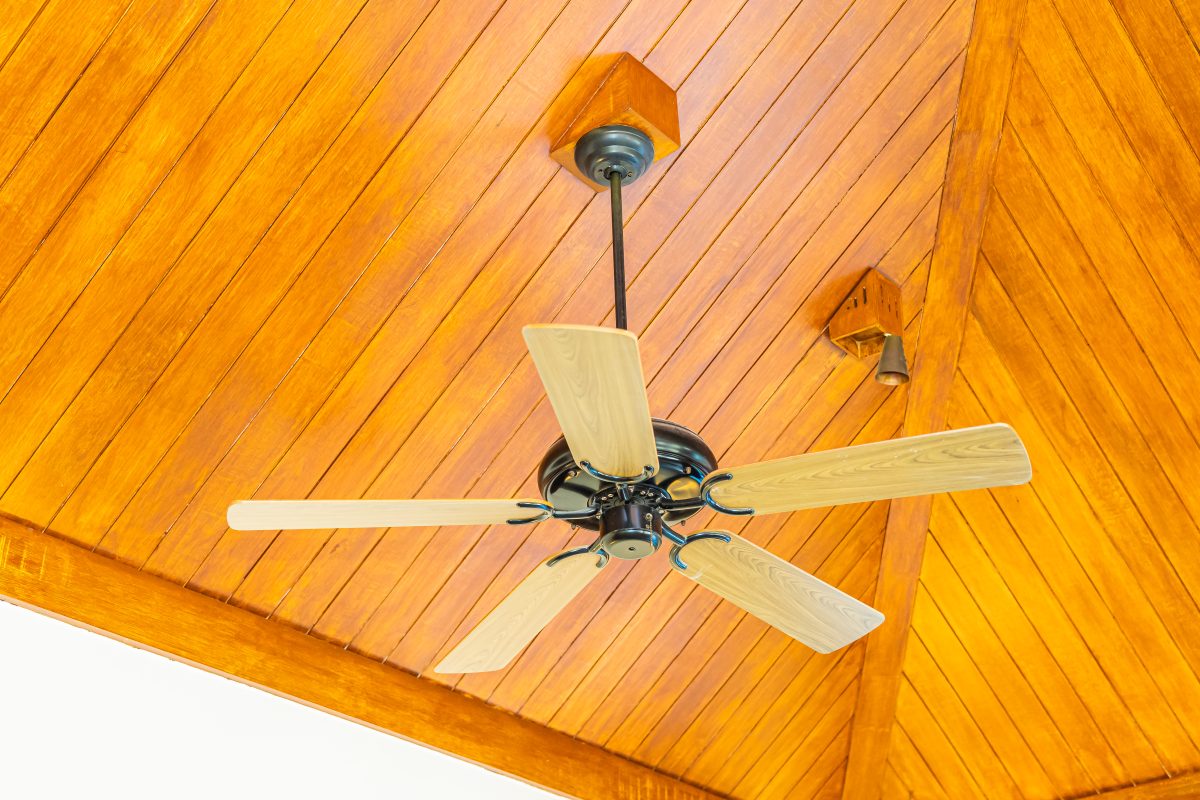
Step 3: Choose the Right Fan Type for the Room
Different spaces require different fan designs.
Living Rooms and Bedrooms
Standard ceiling fans with moderate blade pitch work best. Quiet motors are important for sleeping areas.
Kitchens
Choose easy-to-clean blades and strong airflow to handle heat and humidity.
Outdoor Areas
Patios and alfresco spaces need weather-rated fans. Outdoor ceiling fan installation services on the Sunshine Coast often recommend corrosion-resistant materials and sealed motors.
Smart Homes
Modern homes on the Sunshine Coast benefit from smart ceiling fan installation, which offers app control, timers, and voice integration to improve energy efficiency.
Step 4: Blade Design and Motor Quality
Blade count does not equal performance. Blade length, pitch, and motor strength matter more.
- Blade pitch between 12 and 15 degrees improves airflow
- DC motors use less power and run quietly
- AC motors are cost-effective and reliable
Poor motor selection leads to vibration and noise, often mistaken for mechanical failure.
Step 5: Energy Efficiency and Seasonal Settings
Ceiling fans improve comfort year-round when used correctly.
- Summer mode pushes air downward for cooling
- Winter mode circulates warm air evenly
According to guidance from the Australian Government’s energy efficiency resources, proper airflow circulation reduces heating and cooling demand when paired with insulation and smart controls.
Step 6: Lighting Integration and Control Options
Many fans include integrated LED lighting. Consider:
- Dimmable lighting for bedrooms
- Separate wall controls for fan and light
- Remote or app-based control for accessibility
Fans installed near existing lighting circuits often benefit from professional planning alongside smart lights and residential lighting solutions.
Step 7: Placement for Best Airflow
Correct placement improves performance more than higher speed settings.
- Centre the fan in the room when possible
- Avoid placing directly above beds unless clearance allows
- In rectangular rooms, align airflow with walking paths
Incorrect placement is a common reason homeowners request ceiling fan repair services on the Sunshine Coast.
When Repair or Replacement Makes More Sense
If an existing fan struggles despite correct sizing:
- Wobbling may indicate worn bearings
- Humming suggests electrical wear
- Poor airflow can mean an outdated blade design
In many cases, upgrading offers better efficiency than repeated repairs.
Installation Safety and Electrical Compliance
Ceiling fans require secure mounting, balanced wiring, and correct load ratings. Improper installation increases fire risk and increases the risk of motor failure.
For electrical standards and household safety, NSW Fair Trading outlines licensed installation requirements and compliance expectations.
Planning for Long-Term Comfort
Choosing the right ceiling fan supports:
- Lower power bills
- Improved air circulation
- Reduced wear on cooling systems
- Better indoor comfort
Matching room size, ceiling height, and usage habits prevents costly mistakes later.
Final Thoughts
Selecting the right ceiling fan is about more than appearance. Proper sizing, placement, and installation determine airflow quality and long-term performance. If you’re planning upgrades, replacements, or new installations, professional guidance can help you avoid common errors.
For expert ceiling fan installation on the Sunshine Coast, safe electrical work, and long-lasting results, Brockyselectrical provides reliable solutions tailored to modern homes.
FAQs
Q1. What size ceiling fan is best for a bedroom?
Ans. Most bedrooms suit a 1200–1300 mm fan, depending on room size.
Q2. Can I install a ceiling fan myself?
Ans. Electrical regulations usually require licensed installation for safety and compliance.
Q3. Are smart ceiling fans worth it?
Ans. They offer better control, scheduling, and energy efficiency.
Q4. How high should a ceiling fan be installed?
Ans. Blades should be at least 2.1 m above the floor.
Q5. When should a ceiling fan be replaced instead of repaired?
Ans. Persistent noise, weak airflow, or electrical faults often justify replacement.